DIPLOMA PROGRAMS

Foundation for Frontline Impact !
Designed for those ready to enter the healthcare workforce quickly and effectively. Our Diploma Programs combine hands-on training with ethical grounding. These programs are ideal for students seeking high-impact careers in essential, patient-facing roles.
Diploma in Clinical Laboratory Sciences

Overview
Diploma in Clinical Laboratory Sciences prepares students to become skilled professionals in diagnostic science. This program equips learners to perform, interpret, and manage laboratory tests critical to patient care, medical research, and public health.
With extensive lab training, real-world simulations, and a curriculum aligned with global standards, students graduate with the competence and confidence to contribute meaningfully to clinical environments and diagnostic laboratories.
Key Elements of the Program
Hands-On lab training from year 01 core courses include microbiology, hematology, immunology, and clinical chemistry.
Diagnostic equipment proficiency real-time exposure to industry-standard lab instruments and protocols.
Global curriculum standards designed in alignment with ASCP and international certification expectations.
Simulation-Based case studies practice, real clinical scenarios to enhance decision-making and accuracy.
Career-Ready by graduation, eligible to work in hospitals, research labs, diagnostics centers, and public health organizations.
Structured 19 in class and 07 medical lab courses and 02 out of class observership / trainings.
Program Structure
A comprehensive, application-based program designed to produce highly skilled laboratory professionals prepared to play a critical role in modern healthcare delivery. This two-year diploma program is structured to equip students with a deep understanding of laboratory diagnostics, analytical techniques, and healthcare technologies essential for clinical and research settings.
YEAR 01: FOPUNDATION IN HEALTH SCIENCES AND CLINICAL READINESS
The first year lays the groundwork in scientific principles, healthcare communication, and basic laboratory skills. Students will complete coursework in medical terminology, english communication, healthcare informatics, epidemiology, and biomedical tools. observership / training begins early, with clinical exposure in history taking, communication, and vital sign assessment.
Further study introduces microbiology, pharmacology, clinical chemistry, and medical laboratory diagnostics, along with healthcare law and ethics, allowing students to build competencies in both scientific methods and healthcare professionalism.
YEAR 02: CORE LABORATORY SCIENCE AND RESEARCH SKILLS
This phase focuses on genetics, pathology, anatomy and physiology, histology, and clinical instrumentation. Practical skills are sharpened through immersive observership / training in nursing care and exposure to hospital-grade diagnostics.
Students advance to laboratory-intensive modules in immunology, hematology, histopathology, parasitology, biochemistry, and medical microbiology. The curriculum also incorporates laboratory safety, quality assurance, and an applied community / laboratory research project.
Career Opportunities
The program prepares graduates for diverse roles, including but not limited to:
Core Clinical Roles:
Clinical laboratory scientist, technologist, medical laboratory technician, hematology, microbiology, or blood bank specialist, laboratory supervisor / manager, infection control officer, clinical research associate, laboratory information systems analyst.
Extended Career Pathways:
Technical or sales specialist in diagnostic companies, quality assurance or regulatory affairs professional, biomedical product development or R&D, public health laboratory analyst, educator or clinical trainer, forensic or veterinary laboratory scientist.
Further Education & Advancement:
Graduate studies in Biomedical Science, Public Health, Molecular Biology, or Lab Management
Entry into Medical, Dental, or Pharmacy school
Diploma in Pharmacy Technician
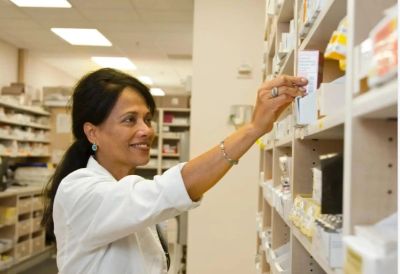
Overview
Diploma in Pharmacy Technician program trains students to become essential members of the pharmacy and healthcare delivery team.
Students learn to assist pharmacists in preparing and dispensing medications, managing inventory, handling prescriptions, and communicating with patients and healthcare providers. With an emphasis on safety, accuracy, and ethics, this program blends classroom learning, simulation labs, and real-world practice to prepare graduates for pharmacy technician roles in hospital, retail, and clinical settings.
Key Elements of the Program
Technological Base:
Training in accurate dispensing, labeling, and pharmacy software usage.
Drug Knowledge:
Strong foundation in drug classifications, interactions, and measurements.
Real-World Scenario:
Real-world pharmacy counter scenarios and sterile compounding exercises.
Laws & Ethics:
Covers pharmacy law, HIPAA (privacy), and patient confidentiality.
Workforce Readiness:
Prepares students for certification exams and immediate employment in hospital or retail settings.
Program Structure:
16 in Class and Lab Courses and 02 out of class Practical Experimental Learning (PEL) / Supervised pharmacy externship.
Program Structure
The program equips students with the foundational knowledge, clinical acumen, and technical skills required to support licensed pharmacists in diverse healthcare environments. This two-year comprehensive program is tailored to prepare graduates to perform essential functions in medication dispensing, pharmacy operations, inventory control, and patient interaction.
YEAR 01: ACADEMIC FOUNDATIONS AND PHARMACY SCIENCES
Students begin with core healthcare knowledge including anatomy & physiology, medical terminology, pharmacy informatics, and health care law & ethics. Courses in diseases of the human body and healthcare informatics provide context for understanding pharmacologic therapy. In pharmacy calculations I & II, students learn precise dosage computation and formulation techniques, while pharmacy operations and maintenance introduces practical elements of pharmacy management.
Students also delve into pharmaceutics, exploring drug formulation, compounding, and good manufacturing practices, and pharmacology, which offers insight into the mechanisms, actions, and classifications of drugs. The academic year concludes with training in pharmacy dispensing theory and lab, where students practice safe and accurate preparation and distribution of medications in lab-based environments.
YEAR 02: CLINICAL APPLICATION AND RESEARCH
In this phase, students engage in research methods and further hone dispensing and compounding skills in simulated lab environments. The final two trimesters are dedicated to practical experiential learning in licensed pharmacies, where students apply their knowledge in real-time under the guidance of experienced professionals. These rotations enhance proficiency in handling prescriptions, interacting with patients, and managing pharmacy systems.
Career Opportunities
Pharmacy Technician graduates are prepared for roles in community and retail pharmacies, hospitals and clinics, Long-term care and assisted living facilities, Drug distribution centers and wholesalers, regulatory and governmental agencies, health insurance and claims processing, clinical research and pharmacovigilance.
Job titles may include pharmacy technician, dispensing assistant, inventory coordinator, clinical pharmacy assistant, pharmaceutical sales support, healthcare claims processor.
This program opens doors for licensure and certifications required in specific regions or countries, ensuring career mobility and professional growth.
Diploma in Phlebotomy
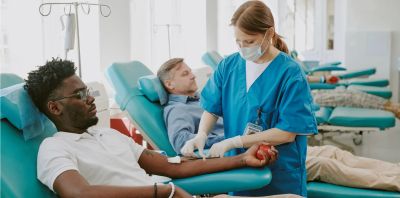
Overview
Diploma in Phlebotomy program prepares students with the technical and interpersonal skills required to excel in modern clinical laboratories, hospitals, and diagnostic centers.
Students learn the science and practice of drawing blood, processing specimens, ensuring patient safety, and maintaining accurate laboratory records. With a focus on precision, patient care, and ethical standards, the program combines classroom theory, advanced simulation labs, and supervised clinical practice to produce graduates who are both competent and confident in phlebotomy procedures.
Key Elements of the Program
Hands-on training in venipuncture, capillary puncture, and specimen collection.
Emphasis on infection control, safety protocols, and ethical patient care.
Simulation-based labs replicating real-world collection and processing scenarios.
Curriculum includes anatomy, physiology, and medical terminology relevant to phlebotomy.
Training in laboratory data entry, specimen labeling, and record management.
Preparation for certification exams in phlebotomy.
Structured 14 in-class and lab courses plus 02 Practical Experiential Learning (PEL) / supervised clinical externship.
Program Structure
Diploma in Phlebotomy is designed to prepare students with the clinical, technical, and interpersonal skills required to become competent and compassionate phlebotomy professionals. The program trains students to assist in blood collection, specimen handling, laboratory safety, and basic diagnostics - core to any healthcare system.
The first four trimesters emphasize classroom and laboratory instruction in core health sciences, specimen collection, biosafety, patient care communication, and foundational laboratory processes. The final two trimesters include clinical practical experience in hospital or laboratory settings under supervision.
CURRICULUM HIGHLIGHTS
Students will explore:
- Medical terminology, healthcare ethics, and infection control.
- Laboratory protocols in hematology, clinical biochemistry, bacteriology, and virology.
- Specimen collection, handling, labeling, and storage techniques.
- Professional behavior, documentation, and patient interaction.
- Real-time clinical Observership and practical sessions in diagnostic settings.
PROGRAM OUTCOMES
Upon successful completion, graduates will be able to:
- Understand healthcare systems and laboratory operations.
- Safely collect, transport, and store various clinical specimens.
- Practice infection control and laboratory safety protocols.
- Document and report laboratory findings professionally.
- Communicate effectively with patients and healthcare teams.
- Assist in managing pre- and post-analytical laboratory processes.
Career Opportunities
Graduates of the program are positioned to pursue rewarding careers in hospitals and clinical laboratories, blood banks and transfusion centers, outpatient clinics and community health centers, diagnostic and research laboratories, home health and long-term care settings. The possible roles include phlebotomy technician, laboratory assistant, dialysis technician (with further specialization), blood bank technician, medical laboratory aide, medical administrative support.
With further study and certification, career pathways may also extend into medical laboratory science, medical assisting, and diagnostic technology roles.
Diploma in Premedical Sciences
Overview
Diploma in Premedical Sciences is a foundational, 2 years program built for students planning to pursue careers in medicine, dentistry, pharmacy, or allied health sciences.
This program focuses on the fundamental principles of biology, chemistry, physics, and human anatomy, while also introducing students to medical ethics and scientific thinking. Whether you’re aiming for further studies or building a solid base for healthcare entry, this program sets the stage for academic and clinical success.
Key Elements of the Program
Comprehensive Science Curriculum: Covers biology, chemistry, physics, mathematics, and human anatomy.
Academic & Career Pathway Readiness: Prepares students for seamless transition into bachelor’s or MD programs.
Lab-Based Learning & Simulations: Includes structured lab sessions with real-world problem solving.
Ethics & Communication Modules: Develops professionalism, cultural awareness, and patient-centered thinking.
Ideal for Medical School Applicants: Fulfills prerequisites for 04-Year MD Pathway or similar programs.
Program Structure:
22 in Class and Lab Courses and 02 out of class Observer ship in health facility.
Program Structure
The program integrates didactic instruction with laboratory and clinical components, distributed as follows:
YEAR 01: INTEGRATED FOUNDATIONS IN SCIENCE AND CLINICAL READINESS
The first year of the program provides a comprehensive foundation in scientific knowledge, healthcare communication, and early clinical exposure, progressively guiding students from basic concepts to applied understanding in healthcare settings.
Students develop strong language proficiency and an understanding of the social and professional context of healthcare. Emphasis is placed on effective communication, ethical practice, and professionalism, ensuring students are prepared to engage confidently within multidisciplinary environments.
Core science courses are introduced and advanced in a structured manner, integrating laboratory diagnostic components that foster analytical thinking, problem-solving, and a solid grasp of scientific methods. Students also build essential quantitative and mathematical skills to support accurate analysis and interpretation in medical and laboratory contexts.
As the year progresses, learners deepen their knowledge in biological and clinical sciences, gaining a systems-level understanding of the human body and cellular function. The curriculum is further enriched with psychology, promoting patient-centered care and strengthening interpersonal skills critical for healthcare delivery.
In parallel, students are introduced to healthcare technologies, laboratory techniques, and ethical frameworks that underpin modern clinical practice. This integrated approach ensures that theoretical learning is consistently aligned with practical application.
A key component of this phase is the introduction of Observership, where students gain early exposure to real-world healthcare environments. This experience allows them to observe professional practices, understand clinical workflows, and begin developing practical insight into patient care and diagnostic processes.
By the end of Year 1, students will have established a strong academic and practical foundation, preparing them for more advanced study and clinical integration in the subsequent phase of the program.
YEAR 02: ADVANCED LEARNING AND CLINICAL INTEGRATION
The final year emphasizes the integration and application of knowledge gained throughout the program. Students engage in advanced coursework in clinical and human biological sciences, strengthening their understanding of disease processes and diagnostic approaches. A dedicated research component introduces principles of evidence-based practice and prepares students for further academic or professional development.
In addition, students undertake a second phase of Clinical Observership, allowing them to consolidate their practical skills, enhance clinical confidence, and demonstrate readiness for professional roles within healthcare and laboratory environments.
This structure ensures a progressive transition from foundational knowledge to applied clinical competence, preparing students for both employment and further academic advancement.
Career Opportunities
The program is ideal for focused and ambitious students seeking a direct, comprehensive path toward a medical career or further studies in healthcare. With a curriculum that balances academic rigor, professional exposure, and ethical grounding, the Diploma in Premedical Sciences at ADREEVA lays a strong foundation for lifelong learning and impactful practice in the health sciences.
Check Our Other Programs

Associate Programs
Our Associate of Science programs offer rigorous academic preparation for careers in applied medical and clinical laboratory sciences.
Certificate Programs
These programs are ideal for candidates with significant experience who seek to upgrade their academic qualifications and enhance their expertise.